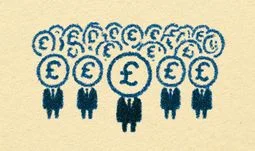
Quant jobs are some of the hardest in finance, but they're getting even harder

There's a reason top quant finance professionals can earn upwards of $500k per year. Succeeding requires a unique skillset and, as AI tools continue to progress, the demands on quants are only becoming more intense.
💥Follow us on WhatsApp for news alerts.💥
One early-level quant from a respected school lasted just one month in their first full-time quant role before leaving for Big Tech. He said that the quant role offered "really good pay" but the tech firm had a "better offer in terms of wellbeing." He said that his senior colleagues during his brief stint in quant finance "really are some of the best in the world."
What makes quant jobs so difficult? One junior quant at an electronic trading firm told us that the nature of the role is "more imprecise than maths, more confusing than engineering." A YouTube video released by a self-proclaimed hedge fund quant last week said that the role is about constantly pursuing an edge: "you're always refurbishing old factors and pursuing new ones." Many can't find enough of an edge, and the job gets especially tough when this is the case; Balyasny's head of quant research Giuseppe Paleologo previously said that working in quant research can be a "living hell" when you're down but "the most enthusing thing in the world" when you're up.
One quant recently told us that quants in his fund spend most of their time coding. With AI-tools speeding up that process, he subsequently said quants are "living through the Jevons Paradox:" they have "more time to work on creative tasks," but there is much more expected of them. What are the non-creative tasks being automated out? The quant YouTuber said that the "unglamorous" and "tedious" aspects of the role include "data scrubbing, cross-checking outliers against other sources, filling gaps, fixing formats, and then reconciling vendors."
AI is not as transformative as it might be elsewhere though, especially when working on latency-critical software. The quant said that "agentic coding tools have high variability in their ability to one-shot a task," and the tools' propensity for small, unchecked mistakes can create a lot of problems down the line. "When an agentic coding tool gets something wrong, you pretty much never trust it again," he said. The output expectations don't seem to have factored this in.
Have a confidential story, tip, or comment you’d like to share? Contact: WhatsApp: http://wa.me/442079977910 (+44 20 7997 7910), Telegram: @AlexMcMurray, Signal: @AlexMcMurrayEFC.88 Click here to fill in our anonymous form, or email editortips@efinancialcareers.com.

Bear with us if you leave a comment at the bottom of this article: comments are moderated intermittently by human beings. Sometimes these humans might be asleep, or away from their desks, so it may take a while for your comment to appear. You must take sole responsibility for comments you post on this site. We will take reasonable steps to weed out anything that we consider to be offensive or inappropriate.