When 22-year-old bankers earned $280k and life was easy
When was the best time to get into banking? Following the 2008 financial crisis, there was a trend for people new to the industry to bemoan their timing. Fortunes were made in the years between 2002 and 2008. They were years of an “extraordinary boom” in the words of Kerim Derhalli, the former head of global equities trading at Deutsche Bank. By comparison, the years after 2008 were a "terrible time" to work in banking, Derhalli informed us ten years later. But even the early 2000s may not have been the most go of the go-go years in financial services.
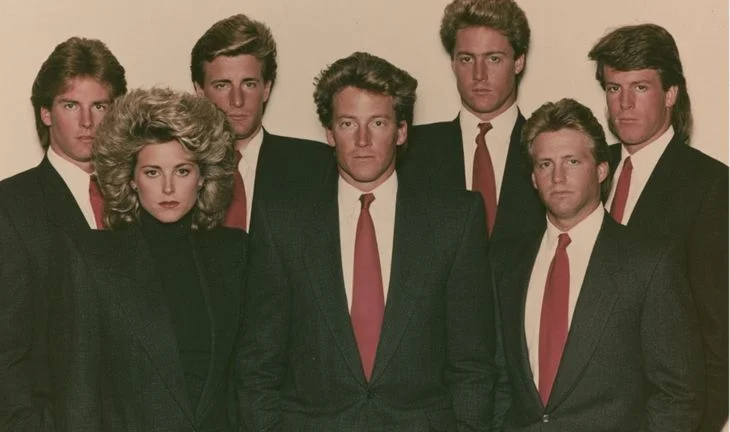
In a new book* Dylan Gottleib, an assistant professor at Bentley University, suggests the late ‘70s and 1980s were the most glorious of times for young people wanting to earn huge sums of money working in investment banks. Jobs were booming, pay was unhinged; hair was huge. And in the right places, the work was a dream.
💥Follow us on WhatsApp for news alerts.💥
It was not always thus. The 1970s were a miserable time to be a banker, but loosening regulation and the advent of the high yield bond market in the early 1980s changed everything. High yield bond issuance went from $5.4bn in 1980 to $46bn six years later. US M&A transactions were worth $12bn in 1975, but $247bn by 1988. Between 1978 and 1986, 117,000 new bankers arrived on Wall Street, says Gottleib.
Previously unsexy jobs became the equivalent of crotch-hugging leather pants. Gottleib details the case of Sidney Homer, a top bond analyst at Salomon Brothers, who was shunned at parties in the 70s: “At cocktail parties lovely ladies would corner me and ask my opinion of the market, but alas when they learned I was a bond man, they would quietly drift away,” Homer recalled.
Suddenly, this was no longer so. Homer's opinions counted, and flush with cash, banks also set out to make themselves and their jobs as desirable as possible. In 1987, Gottleib says Shearson Lehman provided the Princeton students it wanted to hire with rooms at the Ritz and an unlimited bar tab at the Jockey Club in Manhattan. One student who benefitted claimed he'd been instructed to “go out and have some fun on the company’s account.”
Between 1979 and 1988, the proportion of Wharton graduates going into investment banks went from 5% to 35%. Some of the most prestigious banks to work for at the time – First Boston and Salomon Brothers – went on wild hiring sprees. First Boston tripled in size between 1981 and 1987; Salomon did the same over five years from 1982.
Pay soared. In 1986, first year bankers (aged circa 22) at First Boston could expect at $48k starting salary and a similar bonus. In today’s money, this was equivalent to $280k in total compensation, says Gottleib. By the age of 30, they could expect to earn $1m, or nearly $3m in today's equivalent.
The bankers who were 22 in 1986 are aged 62 now and are mostly either comfortably retired from the industry, working as chairmen schmoozing clients, or running their own boutiques. They probably deserve a rest – even in the 1980s, banking jobs involved long hours. 70 or 80 hour weeks were the norm, says Gottleib. Competition to get the jobs was "brutal."
Some jobs were easier than others, though. In the days before Bloomberg terminals, Fred Stilllman, a former government bond salesman at First Boston, said clients lacked even basic macroeconomic data like Federal Reserve reports on the money supply. "A lot of what you were doing as salesperson was telling people what was going on in the market," Stillman said.
Things changed when the terminal arrived in the early 1980s. Then it became necessary to create a narrative to fit the data and you could no longer simply say "the ten year note's gone up half a point today," said Stillman. Even so, Princeton students attending a recruiting event were told that their workload would be onerous "but not much different than at Princeton."
Liberal arts students were hired to create market narratives, but Gottleib's book is a reminder that even in the 1980s, banks were employing quants and scouring campuses for STEM students. Salomon Brothers, for example, placed an advert in MIT's student newspaper in 1986 stressing that many quants didn't have finance experience and came from "math, physics, engineering, operations research, computer science and other quantitative disciplines." - "Today, Wall Street "quants" are literally shaping the future of high finance," it added.
None of this necessarily ended well. Even without the crashes of the late 80s, the late 90s and the late 2000s, Gottleib says many of those wooed by promises of high pay and high levels of autonomy found themselves burned out, priced out and sleep-deprived.
The yuppy bankers of the 1980s slowly came to realise that they had "hitched themselves to a cruelly unstable industry - one that could discard them in the event of a crisis," claims Gottleib. Worse, he says many were unable to secure an equivalent upper middle class future for their offspring. "Without ties to the old WASP elite or vast stores of inherited wealth, yuppies' kids needed to reproduce their class position via education," he adds. In a bifurcated economy, Gottleib says bankers' children in the early 2020s often faced either, a "dogged pursuit of the yuppie ideal or a steep drop into the precariat."
Not all senior bankers today are in this situation. But for every Ken Moelis with a 45-year-banking career there are hundreds (or maybe thousands) of others who fell by the wayside. Speaking off the record, one recruiter tells us managing directors in 2026 are clinging onto their jobs for dear life rather than retiring quietly like their predecessors. This makes it even harder for the juniors coming up behind them. It wasn't like that in 1986.
*Yuppies: The Bankers, Lawyers, Joggers, and Gourmands Who Conquered New York.
Follow me on X. Follow me on LinkedIn.
Have a confidential story, tip, or comment you’d like to share? Contact: +44 7537 182250 (SMS, Whatsapp or voicemail). Telegram: @SarahButcher. Signal: sarahbutcher.22 Click here to fill in our anonymous form, or email editortips@efinancialcareers.com.
Bear with us if you leave a comment at the bottom of this article: comments are moderated intermittently by human beings. Sometimes these humans might be asleep, or away from their desks, so it may take a while for your comment to appear. You must take sole responsibility for comments you post on this site. We will take reasonable steps to weed out anything that we consider to be offensive or inappropriate.